
Why Restore the Kennebec?
A river at the heart of Maine
For thousands of years, the Kennebec River has been the lifeblood of Central Maine. From Moosehead Lake to Merrymeeting Bay and out to the Atlantic, it has sustained people, wildlife, and historic runs of native, sea-run fish that rivaled anything on the Eastern Seaboard.
Tens of millions of these fish – including American shad, river herring and Atlantic salmon – returned to spawn in the Kennebec watershed every year before heading back to the ocean. This natural migration helped sustain enormous fisheries in the Gulf of Maine, such as cod, as well as other wildlife and birds, like eagles and osprey.
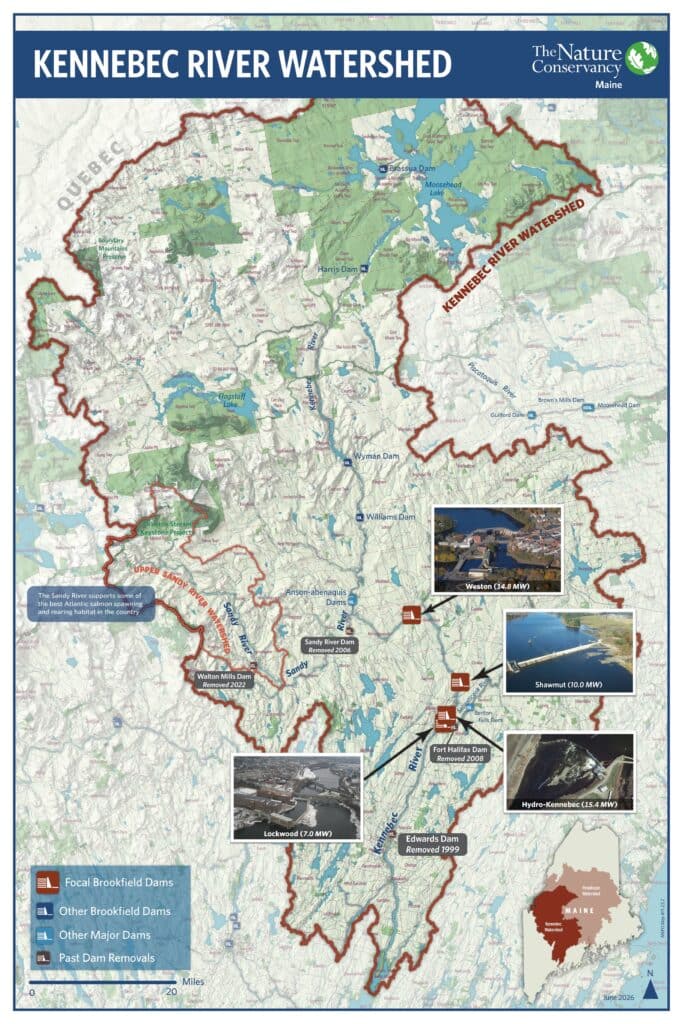
During the past two centuries, dams have been built on the Kennebec to provide hydropower – lots of it. Today, the river and its tributaries host 20 hydroelectric dams.
An historic opportunity
In September 2025, The Nature Conservancy and Brookfield announced an agreement for the sale of the four lower dams on the Kennebec River – Lockwood, Hydro-Kennebec, Shawmut, and Weston. The purchase of the four dams by the Kennebec River Restoration Trust is expected to be finalized next year. Following the sale, Brookfield will be contracted to continue supporting operation of the hydro facilities, which will continue to operate safely, supply power to the grid, and provide tax revenue to communities.
The longer-term vision of the Trust and our partners is to reconnect the Sandy River to the Gulf of Maine by restoring free-flowing conditions to this section of the Kennebec. We intend to manage the multi-year river restoration and redevelopment process in close collaboration with local communities, and are 100% committed to developing a plan with Sappi to ensure the Somerset Mill’s water system needs are fully addressed before any changes are proposed at the Shawmut Dam.
The Kennebec can be home to one of the largest river restoration efforts in the nation, reconnecting over 800 miles of some of the country’s best river and stream habitat. Through thoughtful collaboration, it can be done in a way that provides economic benefits to towns along the river, from municipal revenue to local jobs, while supporting ecological benefits to fish populations and the communities that depend on them.
Answers to Common Questions
Contact Us
Looking for more information?
As this process evolves, we are committed to sharing updates and opportunities to engage. If you do not see what you are looking for here, please contact us at info@kennebectrust.org or use the contact form.
